Ask any parent what their children will remember from their childhood, and you will rarely hear "the time we watched television on a rainy Saturday." The memories that stick are the adventures — the camping trips, the long beach days, the muddy walks that ended somewhere unexpected, the moments that became family stories told over and over at dinner tables years later.
The problem is that those moments evaporate faster than you think. The specific details — the name of the wood, what was found in the rockpool, what a four-year-old said about a particular waterfall — are gone within weeks if they are not written down. A family adventure journal exists to capture the story before the story fades.
What is a family adventure journal?
A family adventure journal is a record of the things your family does together — not a formal diary and not a social media account, but a private log of experiences, places visited, things discovered and moments worth keeping. It can be a physical notebook, a digital app, or a combination of both.
The best family adventure journals include:
- Photos from the adventure, ideally a mix of wide shots and candid close-ups
- A note about where you went and what you did
- Something specific — a funny thing a child said, something surprising you found, why this particular day felt worth recording
- The date and any relevant context (who was there, the weather, how old the children were)
- A location pin or place name so you can find it on a map later
It does not need to be elaborate. The most useful adventure journals are the ones that are easy enough to maintain that you actually do it.
Why a family adventure journal matters
It turns ordinary days into lasting stories
A muddy woodland walk is a nice afternoon. A muddy woodland walk with a photo, a location, and a note that says "Mia found a slow worm under a log and would not stop talking about it for a week" is a memory. The journal is what turns the experience into something permanent and shareable.
It builds a family identity
Families that keep an adventure log tend to go on more adventures. When you have a record of everything you have done together, you see your family as a family that does things — and that self-image is self-reinforcing. Children who grow up with an adventure journal often start keeping their own.
It gives children a sense of their own history
Children love looking at records of their younger selves. A five-year-old looking at photos from when they were two, with your notes about what they said and did, is seeing their own story. That is a gift that becomes more valuable as they grow older.
It makes photo books possible
If your adventures are already logged with photos and notes, turning them into a printed family photo book is straightforward. Without a journal, making a photo book means excavating a camera roll with no context and no story. With one, the book practically writes itself.
How to start a family adventure journal
Option 1 — A physical notebook
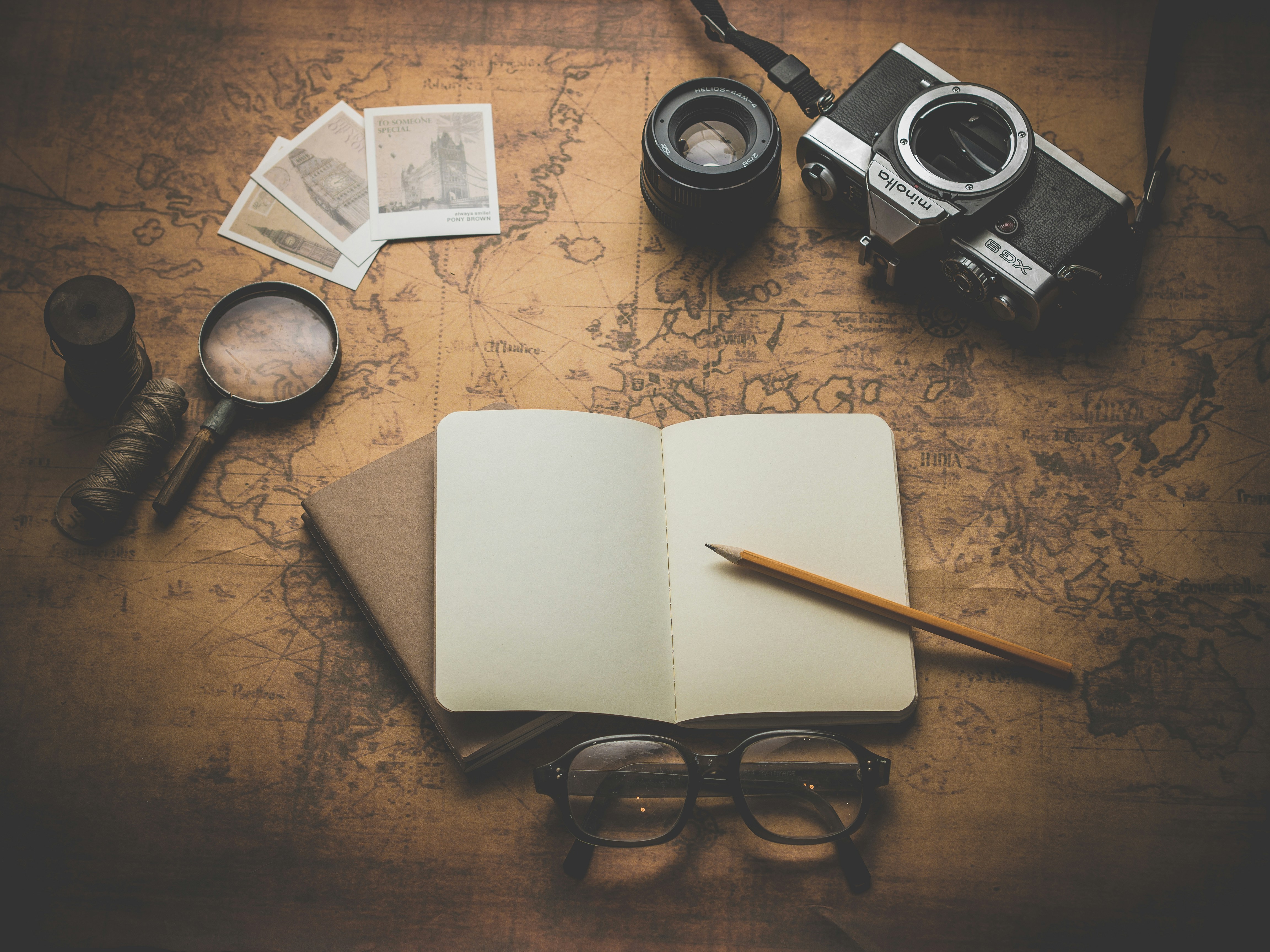
A simple hardback notebook with a pen in the cover. Write the date, the place and a few sentences while the children are having a snack on the way home. Stick in a leaf, a ticket stub or a small found object. Simple, tactile, requires no batteries.
The limitation: it is hard to search, impossible to back up, and the photos live elsewhere. Good for families who love writing and are disciplined about it.
Option 2 — A family adventure app
PocketTreasures is designed specifically as a family adventure log. You add photos straight from your camera, record a voice note or type a short memory, and the app captures your location automatically. Adventures are organised chronologically and grouped so everything from one day is together — not scattered across a camera roll.
Everything stays privately on your device. There is no public feed, no followers and no algorithm. Just a growing record of your family's life, organised beautifully and ready to search, relive or print whenever you want.
Option 3 — A combination approach
Some families keep a brief digital log in the moment (a voice note or a quick text entry while things are fresh), then spend ten minutes at the weekend writing more fully in a physical journal. The digital record preserves the details; the written journal preserves the feeling.
What to include in each adventure entry
You do not need to write an essay. The most useful entries are specific rather than long. Aim for:
- Where you went (specific enough that you could find it again)
- Who was there
- One thing that happened that was unexpected, funny or particularly memorable
- Something one of your children said or did
- How you felt about the day
That is it. Five things, most of which take a sentence each. An entry that takes three minutes to write will bring back the full memory in vivid detail twenty years from now.
Turn your adventure journal into a photo book
Once you have a year's worth of adventures logged, you have the raw material for a genuinely beautiful printed record. PocketTreasures Photobooks will turn your logged adventures into a family photo book automatically — pulling the photos, notes and locations into a chronological layout, ready to print and deliver to your door.
The best thing about this approach is that the work is already done. You do not sit down one January evening trying to remember what you did in April. The journal remembers for you.
Start your family adventure journal today
Download PocketTreasures free and log your first adventure. It takes two minutes and you will be glad you started.
Download on the App Store